










If your fried food looks right but never quite tastes like what you get at restaurants, you are not alone. You follow recipes, use decent oil, and still end up with soggy coatings, uneven color, or bland flavor. The difference is not a secret ingredient or expensive fryer. It comes down to one overlooked factor that most home cooks miss.
It is temperature control.
Restaurants are not just better at frying because of skill. They are consistent. They keep oil at the exact right temperature from start to finish. That one habit changes everything about how fried food turns out.
The good news is you can fix this at home without fancy equipment.
Why Temperature Matters More Than Anything Else
When food hits hot oil, two things happen at once. The outside crisps up while the moisture inside turns to steam and cooks the interior. If the oil is at the right temperature, this process happens quickly and evenly.
If the oil is too cold, your food absorbs oil instead of crisping. The result is greasy, heavy, and often undercooked inside.
If the oil is too hot, the outside burns before the inside cooks through.
Restaurants avoid both problems by maintaining a steady range, usually between 170°C and 190°C, depending on the food. That is why their fried chicken is crispy on the outside and juicy on the inside every single time.
At home, most people guess the temperature. That guess is usually wrong.
The Biggest Mistake Home Cooks Make
The most common issue is not preheating the oil properly or failing to maintain heat after adding food.
When you drop food into oil, the temperature drops immediately. If you are not monitoring it, you end up frying at a much lower temperature than you think.
This is why your first batch might turn out okay, but the next ones get worse.
Professional kitchens solve this with industrial fryers. You do not need that. You just need awareness and a simple tool.
How to Get Restaurant Quality Results at Home
You can dramatically improve your frying with a few small changes.
1. Preheat Oil Properly
Do not rush this step. Let your oil reach the correct temperature before adding anything. Medium heat is often too vague. Give it time to fully heat up.
A quick test, like dropping in a breadcrumb, can help, but it is not precise. For consistent results, you need to know the exact temperature.
That is where a candy thermometer becomes useful. It removes the guesswork and gives you control.
2. Maintain Consistent Heat
After adding food, monitor the temperature. If it drops too much, increase the heat slightly. If it rises too high, lower it.
This small adjustment is what separates average frying from great frying.
You do not need to stare at the stove constantly. Just check periodically and adjust as needed.
3. Avoid Overcrowding
Adding too much food at once causes a sharp drop in oil temperature.
Fry in smaller batches instead. This keeps the oil stable and gives each piece enough space to cook evenly.
It also improves crispiness since moisture can escape more easily.
4. Use the Right Oil
Choose oils with a high smoke point, such as vegetable oil, sunflower oil, or canola oil.
These oils can handle high temperatures without breaking down or affecting flavor.
Using the wrong oil can lead to a burnt taste or poor texture.
The Small Detail That Changes Everything
Here is where most home cooks finally bridge the gap.
Restaurants do not rely on visual cues. They rely on numbers.
Using a kitchen thermometer ensures your oil stays in the ideal range. It takes away uncertainty and replaces it with consistency.
Once you start measuring temperature, you will notice immediate improvements:
- Crispier coatings
- Even golden color
- Better texture inside
- Less oil absorption
It is one of the simplest upgrades you can make in your kitchen.
Extra Tips for Better Frying
Once you have the temperature under control, these small techniques make an even bigger difference.
Dry Your Food Before Frying
Excess moisture causes splattering and lowers oil temperature. Pat food dry before adding it to the oil.
Season at the Right Time
Salt your food immediately after frying while it is still hot. This helps the seasoning stick better.
Use a Wire Rack Instead of Paper Towels
Let fried food rest on a rack so excess oil drips away without trapping steam. This keeps it crispy longer.
Keep Oil Clean
Strain your oil after use if you plan to reuse it. Burnt particles affect both taste and performance.

You Do Not Need a Professional Kitchen
It is easy to assume restaurants have some secret advantage, but the truth is much simpler.
They control temperature precisely.
That is something you can do too, even with basic cookware. Once you stop guessing and start measuring, your results become predictable and repeatable.
Frying stops feeling like trial and error and starts feeling easy.
Final Thoughts
If your fried food has been disappointing, the issue is not your skills or your ingredients. It is temperature control.
Fix that one thing, and everything improves.
You do not need expensive tools or complicated techniques. A simple candy thermometer gives you the accuracy that makes all the difference.
A Simple Upgrade That Makes Frying Easier
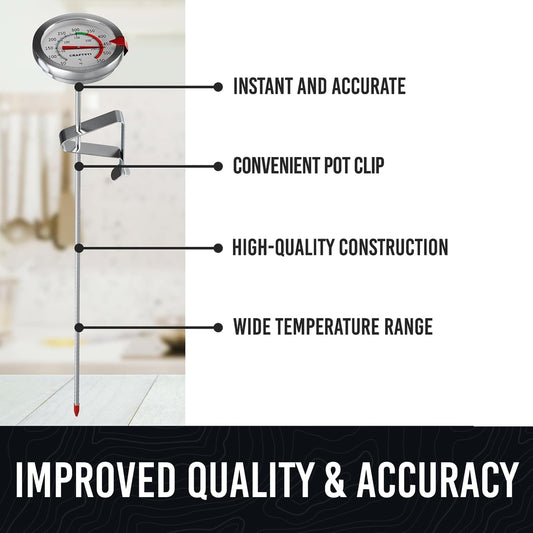
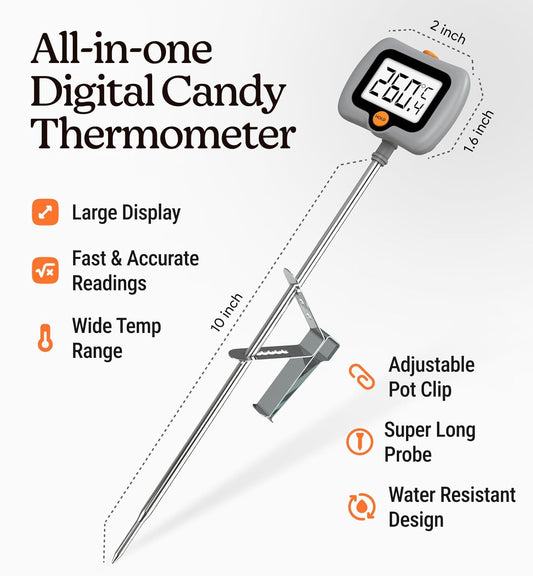
If you want an easy way to start controlling oil temperature, this candy thermometer is a practical addition to your kitchen. It clips securely to your pot, gives clear readings, and helps you maintain the right heat without constant guesswork. Whether you are making fried chicken, snacks, or sweets, it turns inconsistent results into something reliable and repeatable.


