










Deep frying can seem tricky, but with a classic cooking thermometer, you can achieve restaurant-quality results at home. Maintaining precise oil temperatures ensures your food is crispy on the outside, tender on the inside, and perfectly cooked every time.
Why a Thermometer Is Essential for Deep Frying
Frying requires oil heated to specific temperatures. Too low, and food absorbs excess oil and becomes greasy. Too high, and it burns on the outside while remaining raw inside. A cooking thermometer removes the guesswork and helps maintain consistent heat.
Using a thermometer also improves safety. Hot oil can easily splatter and cause burns. Knowing exactly when your oil reaches the right temperature keeps cooking efficient and reduces accidents. Beginners can follow a step-by-step guide to master frying confidently.
Ideal Deep Frying Temperatures
1. 325°F – 350°F (163°C – 177°C)
This is the standard range for most fried foods, including chicken, fries, and doughnuts. Keeping oil in this range ensures food cooks evenly and crisps properly.
2. 350°F – 375°F (177°C – 191°C)
Higher temperatures are ideal for thinner foods that cook quickly, like tempura or small shrimp. A cooking thermometer ensures you don’t exceed this range, preventing burnt exteriors.
3. 375°F – 400°F (191°C – 204°C)
Used for quick-frying small batches or achieving extra-crispy coatings. Extreme caution is needed; oil can smoke or ignite if it surpasses 400°F.
Maintaining the right temperature consistently is much easier with a thermometer than relying on guesswork.
How to Use a Deep Frying Thermometer
-
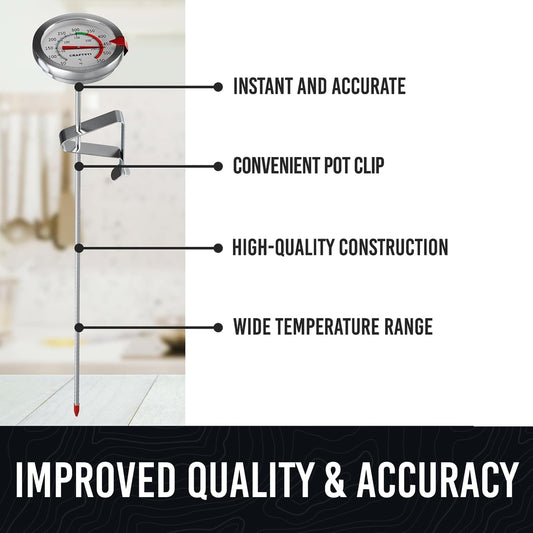
Clip it securely to the side of your pot so it does not touch the bottom. Direct contact can give false readings.
-
Preheat your oil slowly to the desired temperature. Sudden heat spikes can ruin your food.
-
Stir or turn food gently to maintain an even temperature throughout frying.
-
Monitor the thermometer at eye level to ensure accurate cooking temperatures.
-
If the oil cools during cooking, adjust the heat gradually rather than increasing it sharply.
A clip-on thermometer is ideal for beginners. It allows hands-free monitoring and reduces the risk of burns.
Tips for Perfect Frying Every Time
-
Fry in small batches to prevent temperature drops. Overcrowding the pan leads to greasy, unevenly cooked food.
-
Use a thermometer to check the oil before each batch.
-
For foods like fritters or donuts, check recommended temperatures as a reference for frying sugar coatings.
-
Always have a thermometer ready when experimenting with new frying oils or recipes. Accurate temperature control is key to crisp, golden results.
-
Keep a lid nearby in case oil splatters. Safety first.

Avoid Common Mistakes
-
Do not leave the thermometer in unattended oil. Continuous monitoring prevents overcooking.
-
Keep the thermometer clean and dry before use. Residue or moisture can affect readings.
-
Be mindful of smoking points for different oils; exceeding them can cause unpleasant flavors or fire hazards.
Following these tips ensures your fried food is always crunchy, flavorful, and safe to make.
Conclusion: Master Deep Frying With Confidence
Deep frying at home is simple with the right tools. A classic cooking thermometer helps maintain ideal temperatures, ensures safety, and produces restaurant-quality results.Whether you’re a beginner or an experienced cook, following a step-by-step kitchen thermometer guide and keeping an eye on temperatures will make cooking easier and more precise.
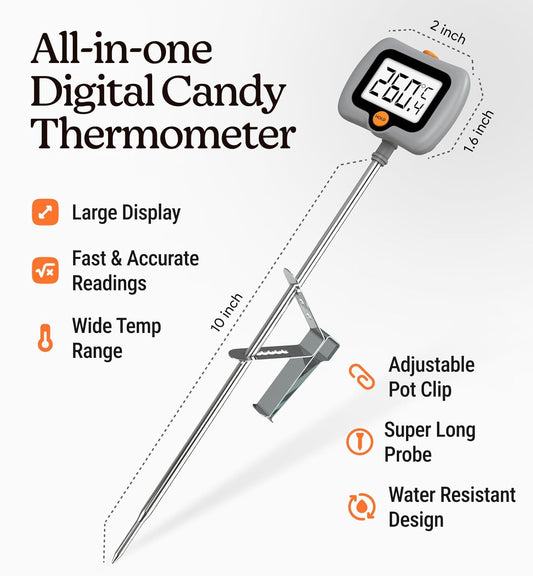
For a reliable, versatile option, try the CRAFT911 Candy Thermometer. Though designed for candy and frying, it works for multiple kitchen tasks, including deep frying and jam making. Investing in a high-quality thermometer guarantees consistent, delicious results while making your kitchen safer and more efficient.


