











Making caramel, fudge, and toffee at home might sound advanced, but with the right method and temperature control, it is surprisingly approachable. These classic sweets are all based on sugar, heat, and timing. Once you understand the process, you can reliably create smooth caramel, creamy fudge, and crisp toffee in your own kitchen.
This beginner-friendly guide walks you through each candy step by step, explains key temperatures, and shares practical tips so your results look and taste professional.
Why Temperature Matters in Candy Making
All three candies rely on precise candy making temperatures. Sugar behaves differently as it heats, and each stage creates a unique texture. Guessing often leads to burnt sugar, grainy fudge, or sticky toffee.
Using a candy thermometer gives you:
- Consistent texture every time
- Better flavor without burning
- Clear visual progress while cooking
-
Confidence when following recipes
If you want accurate cooking temperatures, a thermometer is not optional. It is the foundation of successful candy making.
Tools You Need Before You Start
You do not need a professional kitchen setup. A few basic tools are enough.
- Heavy-bottomed saucepan
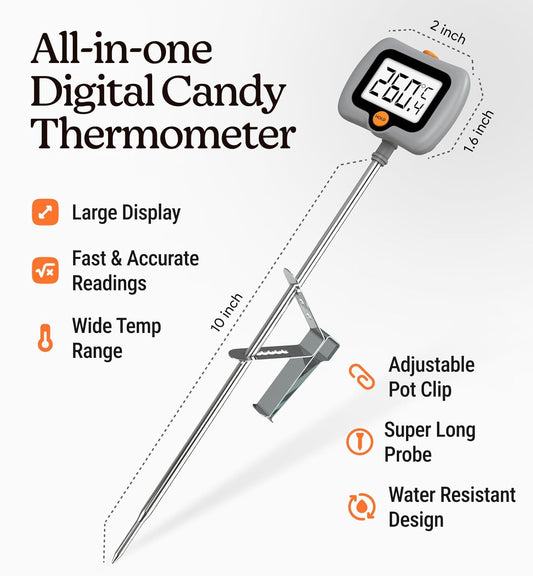
- Candy thermometer or classic cooking thermometer
- Heat-resistant spatula
- Measuring cups and spoons
- Parchment paper or buttered pan
A thermometer that covers high ranges, such as a 50–280°C (122–536°F) thermometer, works best for caramel, fudge, and toffee.
Step-by-Step: How to Make Caramel
Caramel is made by heating sugar until it melts and browns. Timing and temperature are critical.
Step 1: Heat the sugar
Add sugar to a clean saucepan. Heat on medium without stirring. The sugar will clump, then melt.
Step 2: Watch the color and temperature
As the sugar melts, it turns golden brown. The ideal caramel temperature is usually around 170 to 175°C (338 to 347°F).
Step 3: Remove from heat
Once the color is deep amber, remove the pan immediately. Overheating causes bitterness.
Step 4: Add butter or cream carefully
If making sauce, add warm cream slowly. It will bubble aggressively.
Pro tip: Always rely on the thermometer, not just color. Lighting can be misleading.
Step-by-Step: How to Make Fudge
Fudge requires careful control to stay smooth and creamy. Most problems come from incorrect temperature or overmixing.
Step 1: Combine ingredients
Mix sugar, milk or cream, butter, and flavorings in a saucepan.
Step 2: Heat slowly
Bring the mixture to a gentle boil while stirring lightly.
Step 3: Reach the soft ball stage
Cook until the thermometer reaches the fudge soft ball stage, usually around 112 to 115°C (234 to 239°F).
Step 4: Cool before beating
Remove from heat and let the mixture cool slightly. This step prevents graininess.
Step 5: Beat until thick
Stir until the fudge thickens and loses its shine, then pour into a prepared pan.
This controlled process ensures the classic creamy texture people expect from homemade fudge.
Step-by-Step: How to Make Toffee
Toffee is firmer and requires higher heat than fudge. Precision matters even more.
Step 1: Melt butter and sugar together
Cook over medium heat, stirring constantly.
Step 2: Monitor temperature closely
Toffee cooks to the hard crack stage, usually around 150 to 155°C (302 to 311°F).
Step 3: Act quickly
Once the temperature is reached, pour immediately into a lined pan.
Step 4: Cool completely
Let the toffee set fully before breaking or cutting.
Because toffee cooks fast near the end, keeping an eye on the thermometer prevents burning.
Understanding Sugar Stages at a Glance
Each candy depends on specific sugar stages. A sugar stages chart helps you connect temperature to results.
- 110 to 115°C (230 to 239°F): Soft ball stage, ideal for fudge
- 150 to 155°C (302 to 311°F): Hard crack stage, used for toffee
- 170 to 175°C (338 to 347°F): Caramelization range
Knowing these stages makes it easier to switch between recipes without confusion.

Common Candy Making Mistakes to Avoid
Even simple recipes can fail if small details are ignored.
Heating too fast
High heat causes uneven cooking and burning.
Letting the thermometer touch the pan
This gives incorrect readings.
Overstirring
Excess stirring encourages sugar crystals, especially in fudge.
Skipping preparation
Always line pans and measure ingredients before cooking. Sugar moves fast once hot.
Avoiding these mistakes improves consistency and reduces wasted batches.
Extra Tips for Consistent Results
- Use the same thermometer for repeat recipes to stay consistent
- Clean the thermometer immediately after use
- Keep a bowl of cold water nearby for quick cooling if needed
These habits help you master candy making faster.
Final Thoughts
Caramel, fudge, and toffee may look different, but they all follow the same basic principle. Control the heat, respect the temperature, and work methodically. With a thermometer and a clear step-by-step process, even beginners can achieve professional results.
Once you master these three classics, you will find that homemade candy is not only rewarding but also far more reliable than guessing ever was.
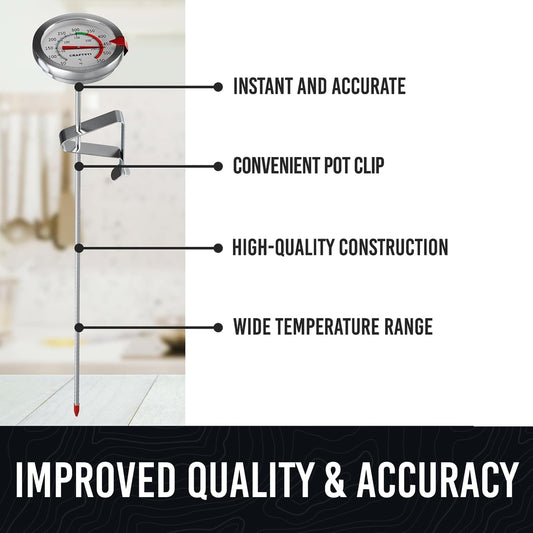
For precise and reliable temperature control, our candy thermometer features a wide range and a secure pot clip for hands-free monitoring. Its clear, easy-to-read dial ensures consistent results, helping you achieve perfect caramel, fudge, and toffee every time.

