







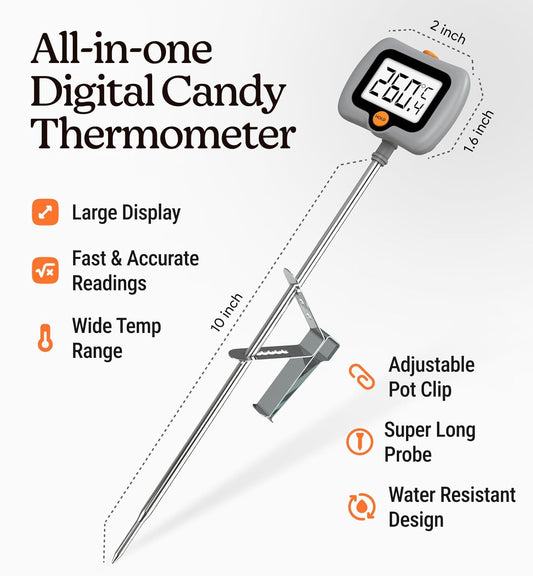




Most people buy a digital candy thermometer for one reason. Candy. Caramel, fudge, toffee, and syrup all depend on precise heat. But once you own one, you quickly realize it can do far more than that.
A digital candy thermometer is actually one of the most versatile tools in the kitchen. Its wide temperature range, fast readings, and accuracy make it useful for many everyday cooking tasks. If your thermometer is sitting in a drawer between candy projects, you are missing out.
This guide shows you unexpected but practical ways to use it beyond candy making.
Why a Digital Candy Thermometer Is So Versatile
Before using a digital candy thermometer, you first need to understand temperature control. Many cooking processes depend on hitting a specific heat range, not guessing by sight or time.
A quality thermometer for candy making often measures from very low to extremely high temperatures. That makes it useful for oil, sugar, dairy, meats, and even beverages.
Compared to single-purpose tools, this is where a digital thermometer really earns its place in the kitchen.
Frying Oil Without Guesswork
Deep frying success depends on oil temperature. Too hot and food burns outside while staying raw inside. Too cool and food absorbs oil and turns greasy. Use your kitchen thermometer to:
- Check the oil temperature before adding food
- Monitor drops in heat after frying begins
- Maintain a steady frying temperature
Most frying happens between 350°F and 375°F, well within the range of a candy thermometer. This simple step improves crispness and consistency instantly.
Perfect Caramel and Syrups for Drinks
Even outside traditional candy recipes, sugar control matters. Use your thermometer when making:
- Coffee syrups
- Simple syrup for cocktails
- Caramel drizzle for desserts
Knowing the exact temperature helps you control thickness and sweetness. A few degrees can be the difference between pourable syrup and hardened sugar.
This is one of the easiest ways to reuse your candy-making thermometer regularly.
Heating Milk and Dairy Gently
Milk burns easily and scorches faster than most people expect. If you heat dairy too quickly, it develops an unpleasant taste. A digital thermometer helps you:
- Warm milk for yeast-based recipes
- Heat milk for hot chocolate without scalding
-
Prepare custards and sauces smoothly
Most dairy should stay below 180°F. Watching the number instead of guessing prevents waste and improves flavor.

Checking Meat and Poultry Temperatures
Although it is not marketed as a meat tool, a digital candy thermometer can still help in a pinch. You can use it to:
- Check the internal temperature of the chicken
- Test doneness of roasts and steaks
-
Ensure food safety
While a dedicated meat thermometer may be faster for thick cuts, a candy thermometer still delivers accurate readings when used carefully.
This versatility makes it a reliable backup in any kitchen.
Making Yogurt and Fermented Foods
Fermentation depends heavily on temperature control. Use your thermometer to:
- Cool milk to the right temperature before adding cultures
- Maintain warm conditions during fermentation
-
Avoid killing beneficial bacteria with excess heat
For homemade yogurt, milk usually needs to cool to around 110°F before cultures are added. Guessing here can ruin an entire batch.
Tempering Chocolate More Confidently
Chocolate is sensitive and unforgiving. A few degrees too high or too low affects shine, snap, and texture. Using a thermometer helps you:
- Melt the chocolate gently
- Cool it to the correct working temperature
- Avoid grainy or dull results
This is where beginners often struggle, and where temperature control makes the biggest difference.
Bread and Yeast Dough Support
Yeast is alive, and temperature determines how it behaves. Your thermometer helps by:
- Checking the water temperature before mixing the dough
- Avoiding water that is too hot for yeast
- Monitoring warm milk or butter mixtures
Ideal yeast activation usually happens between 105°F and 115°F. A thermometer removes the risk of killing yeast before baking even begins.
Why Digital Beats Guessing Every Time
The digital vs analog candy thermometer discussion matters here. Digital models respond faster and show exact numbers, which is crucial when switching between tasks like oil, dairy, and sugar.
A clear display, a wide range, and a fast response are the candy thermometer features that make it useful beyond sweets.
Cleaning Between Different Uses
When using the same thermometer for multiple foods, proper cleaning matters. Always:
- Wash the probe after each use
- Avoid cross-contamination between sweet and savory foods
-
Dry completely before storing
These simple habits keep your kitchen thermometer for candy safe and accurate for every task.
Why One Tool Can Replace Several Others
Instead of buying separate tools for oil, sugar, and liquids, one reliable thermometer can handle them all. This saves space, money, and frustration.
Once you realize how many processes depend on temperature, your thermometer stops feeling like a specialty item and starts feeling essential.
Final Thoughts
Your digital candy thermometer is far more than a candy-only gadget. From frying and fermenting to dairy and chocolate, it supports better cooking across the board.
If you already own one, put it to work more often. And if you are considering buying one, know that its value goes far beyond candy making. With a single tool and accurate temperature control, your everyday cooking becomes easier, safer, and more consistent.

